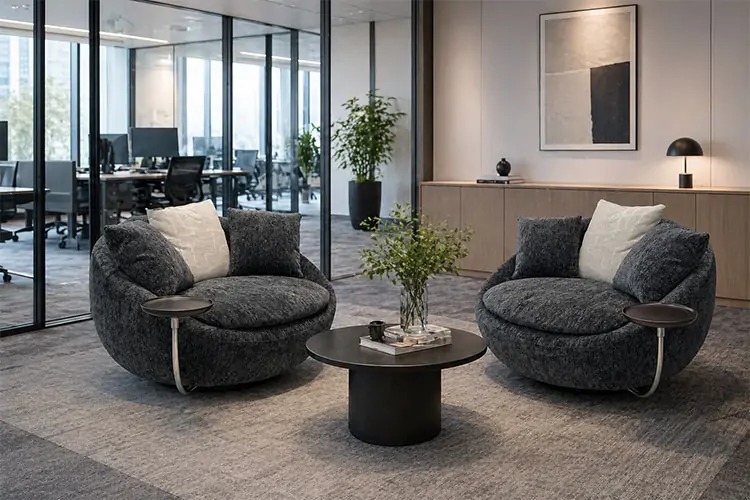
Choosing the right swivel bearing for your lounge chair is more important than you might think. It directly affects how smoothly and quietly your chair rotates, its durability, and your overall comfort. Let’s explore the different types available and find the perfect match for your relaxation needs.
Why Your Lounge Chair’s Swivel Matters
Hey there! Have you ever settled into your favorite lounge chair, ready to relax, only to be met with a stiff, jerky, or noisy turn? That frustrating experience often comes down to the swivel bearing assembly. Think of it as the heart of your chair’s rotation. A high-quality lounge chair swivel mechanism provides that effortless, silent glide that makes reaching for your book or turning to chat feel seamless. It’s not just about convenience; the right bearing type ensures your chair can handle daily use without wearing out quickly, making it a key factor in both comfort and longevity for your rotating lounge chair.
Common Swivel Bearing Types Explained
When you’re looking into types of swivels for chairs, you’ll find a few main players. Each has its own strengths, and understanding them is the first step to making a great choice for your home.
Ball Bearings: The Smooth Operator
This is probably the most common type you’ll encounter. A ball bearing swivel uses small, hardened steel balls that roll between two grooved rings (called races). This design minimizes friction, allowing for incredibly smooth and quiet rotation. It’s a fantastic all-rounder for most residential lounge chairs. If you see a chair advertised with a “smooth-glide” or “360-degree swivel,” it’s likely using a ball bearing system. They’re reliable and require minimal maintenance, which is why they’re so popular in chair rotation systems.
Roller Bearings: The Heavy-Duty Choice
For those bigger, plusher lounge chairs or chairs that will see a lot of use, roller bearings step up to the plate. Instead of balls, they use cylindrical rollers. This gives them a larger contact area, allowing them to support heavier loads more effectively. So, if you have a large, overstuffed chair or you’re looking at commercial grade lounge chair bearings for a waiting room or office, this type offers superior durability. The motion might feel slightly different—still very smooth, but often perceived as more solid and stable.
Plain (Sleeve) Bearings: The Simple & Quiet Option
Sometimes simplicity wins. A plain bearing, also known as a sleeve or bushing bearing, is essentially a sleeve of smooth, low-friction material (like bronze or polymer) that one part rotates inside. They are exceptionally quiet, cost-effective, and work well for chairs that don’t require ultra-fast spinning but prioritize a silent, gentle turn. You might find these in more traditional or minimalist chair designs where the swivel base construction is kept simple. They do generally require occasional lubrication to maintain their performance.
Thrust Bearings: Handling the Vertical Load
This type is a bit of a specialist. While other bearings handle radial load (the sideways force during rotation), a thrust bearing is designed specifically to handle axial load—that’s the straight-up-and-down pressure from you sitting in the chair. In many lounge chairs, you’ll find a thrust bearing assembly working in combination with another bearing type (like ball bearings) to manage both rotational and weight-bearing forces efficiently. This combo is a hallmark of a well-engineered lounge chair pivot mechanism.
How to Choose the Right Swivel Mechanism
So, with all these options, how do you pick? Let’s break it down with some friendly advice. First, consider your chair’s weight and your own usage. A standard-sized chair for occasional reading? A ball bearing swivel plate is likely perfect. For a heavy chair or daily, intensive use, look into roller bearings. Next, think about feel. Do you want buttery-smooth spinning or a more controlled, stable rotation? Finally, listen (or rather, imagine the silence). If a noiseless environment is key, prioritize designs known for quiet operation, often using plain bearings or high-quality sealed ball bearings. Reading product descriptions for terms like heavy duty swivel for recliner or quiet rotation bearing can point you in the right direction.
Keeping Your Chair Swiveling Smoothly
Once you’ve found the perfect chair with the right bearing for rotating chair, a little care goes a long way. For most sealed ball or roller bearings, very little maintenance is needed—just keep them free of dust and debris. If you have a chair with a plain bearing or an unsealed mechanism, a drop of light machine oil on the swivel joint once a year can work wonders. Avoid forcing the chair to turn if it feels stuck, as this can damage the bearing races. Instead, check for obstructions. A well-maintained swivel bearing will keep your lounge chair feeling fantastic for years, making every relaxing moment truly effortless. For more technical details on bearing mechanics, you can visit a resource like Britannica’s entry on bearings.