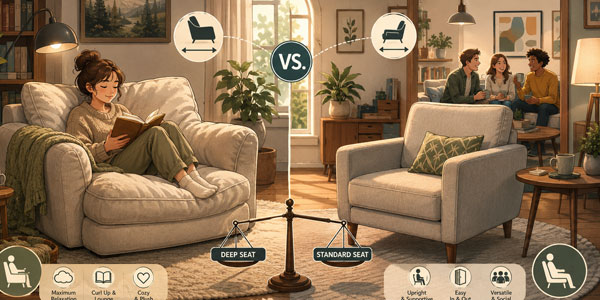
The best chairs for relaxing support the lower back, keep the feet stable or fully supported, and match the user’s preferred sitting angle. Recliners suit adjustable full-body rest, lounge chairs balance comfort with a compact footprint, rocking chairs add gentle movement, and chaise lounges support the legs without a separate ottoman.
Comfort depends less on a style label than on measurable fit. Compare occupied seat depth, back angle, cushion firmness, arm height and the time you expect to remain seated. A chair that feels soft for five minutes may still create pressure behind the knees or insufficient lumbar support during a long reading session.
Top Lounge Chair Picks for Unwinding in Comfort
Hello there! If you’re asking yourself, “What are the most comfortable lounge chairs for my home?” you’ve come to the right place. Think of this as a friendly chat about finding your perfect reading nook or meditation spot. The best reclining chairs aren’t just furniture; they’re personal retreats. I remember helping a friend choose one, and seeing her finally have a dedicated spot to decompress with a book was wonderful. Whether you’re looking for the top-rated lounge chairs for small spaces or a statement piece, it all starts with understanding what *you* need to truly relax.
What Makes a Great Relaxation Chair?
Let’s break down the magic. A superb relaxation seat isn’t defined by price alone. It’s a blend of design, support, and feel that invites you to sink in and stay awhile. When considering the best chairs for lounging and reading, you’re really looking for a companion for your quiet moments.
Ergonomic Support is Non-Negotiable
This is the foundation. A chair might look like a cloud, but if it doesn’t support your lower back (the lumbar region), you’ll be fidgeting in minutes. The ideal recliner chair provides gentle contouring that cradles your spine’s natural curve. Look for chairs with adequate seat depth so your thighs are supported without pressing into the back of your knees. Good armrests are also key—they should allow your shoulders to relax naturally. For a deep dive on the science of sitting well, the Humanscale ergonomics guide is a fantastic resource.
Material Matters for Comfort
Here’s where personal preference shines. Do you love the cozy, broken-in feel of soft leather that gets better with age? Or perhaps you prefer a breathable, textured fabric like wool or cotton? For ultimate coziness, nothing beats a plush upholstered armchair with high-resiliency foam cushioning. It’s like the difference between a stiff hotel chair and your favorite well-worn sweater. The material affects temperature, texture, and maintenance, so choose one that fits your lifestyle.
Related guide: Discover How Shape Influences Lounge Chair Comfort for Ultimate Relaxation
Comparing Popular Lounge Chair Styles
With so many options, choosing a comfortable accent chair can feel overwhelming. Let’s simplify by looking at two main categories. This isn’t about declaring one the winner, but about finding which type aligns with your vision of relaxation.
Recliners & Rockers: The Classic Comfort
These are the undisputed champions of “zoning out.” A modern recliner offers adjustable positions, from upright for chatting to nearly horizontal for a nap. Rocking chairs and gliders provide a soothing, rhythmic motion that many find incredibly calming—perfect for nurseries or quiet corners. If your primary goal is finding lounge furniture for stress relief with maximum adjustability, this category is hard to beat. They are dedicated relaxation machines.
Modern Accent Chairs with a Plush Feel
Don’t let sleek lines fool you. Many contemporary chairs are designed with deep seats, generous padding, and angled backs that encourage lounging. Think of a stylish slipper chair or a wide-seated swivel chair. These pieces often serve double duty as stunning decor and incredibly cozy spots. They answer the question, “What are good lounge chairs that also elevate my room’s style?” beautifully, proving that comfort and design aren’t mutually exclusive.
How to Choose Your Perfect Chair
So, how do you decide? My best advice is to think about your rituals. Do you envision long reading sessions, brief meditations, or casual scrolling? Measure your space—a huge chair in a tiny room can feel oppressive. Most importantly, if possible, test before you invest. Sit in it. Lean back. Notice how your body feels after a few minutes. Does it invite you to stay? Your perfect chair is the one that feels like it was made just for you, a personal haven for ultimate relaxation at the end of the day. For more inspiration on arranging a relaxing space, check out these tips from Architectural Digest on creating a cozy nook.
Related guide: What Is a Lounge Chair? A Friendly Guide to Comfort & Style
Which Relaxing Chair Fits Each Activity?
The best chair for relaxing depends on what relaxing means to you. Reading needs stable back and arm support; television viewing benefits from a supported recline; conversation works better with a moderate angle; and napping usually needs leg and head support. Start with the activity, then compare dimensions using the lounge chair dimensions guide.
| Main activity | Strong starting choice | Essential check | Possible drawback |
|---|---|---|---|
| Reading | Supportive lounge chair with arms | Lumbar contact and elbow position | A deep seat may require a footrest |
| Watching television | Recliner or high-back lounge chair | Head support and viewing angle | Recliners need movement clearance |
| Conversation | Upright lounge or swivel chair | Easy eye contact and standing | Less suitable for napping |
| Napping | Chaise lounge or recliner | Leg, neck and head support | Larger floor footprint |
Five Comfort Checks That Matter More Than Softness
Seat depth: Sit fully against the back. If the front edge presses behind your knees, the seat is too deep for upright relaxation. If you prefer curling up, extra depth may be useful when the back cushions still provide support.
Back angle: A fixed lounge chair can feel excellent when its geometry matches the activity. A recliner adds adjustability but also weight, clearance and mechanism maintenance. The lounge chair vs recliner comparison explains that tradeoff in detail.
Cushion response: A comfortable seat compresses without collapsing. Check whether the cushion returns after standing and whether the front edge remains supportive.
Arm and head support: Armrests should not lift the shoulders. For long television sessions or naps, verify that the back supports the head rather than stopping at the shoulder blades.
Room fit: Comfort disappears when a chair blocks a walkway or cannot face the activity. Browse the lounge chair collection only after recording the available footprint and delivery path.
A Simple Shortlist Before You Buy
- Define the main activity and expected sitting time.
- Record overall width, depth, occupied seat height and usable seat depth.
- Test foot, lower-back, arm and head support together.
- Check fabric feel, cleaning code and cushion recovery.
- Confirm door, stair and elevator access before ordering.
For a chair that must coordinate with a sofa and conversation area, continue with the living-room lounge chair guide.
FAQ
What type of chair is best for relaxing?
A recliner is useful when adjustable back and leg support matter most. A lounge chair is often better when you want a restful seat with a smaller footprint and a more versatile appearance.
Is a soft chair always more comfortable?
No. Excessively soft cushions can allow the hips to sink too far and make standing difficult. Balanced support and the correct seat depth are usually more important than initial softness.
What should I measure before buying a relaxation chair?
Measure seat height, usable seat depth, back height, overall width and the required clearance around the chair. Also confirm doorways and the delivery path.