Lounge chair dimensions should be evaluated by room fit, sitting comfort, material behavior, and the role it plays in the space. The best choice is not only the chair that looks attractive in a photo; it is the chair that fits the room, supports the intended sitting time, and works with the surrounding furniture after daily use begins.
Quick Answer
Choose lounge chair dimensions by checking five things first: the room size, the seat dimensions, the upholstery or frame material, the color or style relationship, and the amount of use the chair will receive. If one of those checks fails, the chair may look right online but feel wrong in the finished room.
| Decision point | Better choice | Why it matters |
|---|---|---|
| Main use | living room, bedroom, office, hotel room, lounge, and apartment spaces | The room function determines size, fabric, and support |
| Comfort check | chair width, seat depth, back height, arm height, clearance, and delivery path | Comfort is measurable, not just a soft impression |
| Material check | upholstery fabric, frame quality, cushion fill, and surface care | Material affects cleaning, durability, and appearance |
| Style check | how dimensions affect visual balance, comfort, and furniture planning | The chair must connect to the room rather than float alone |
| Buyer check | homeowners, designers, hospitality buyers, retailers, and project purchasers | Different buyers need different levels of durability and repeatability |
Key Takeaways
- A lounge chair works best when size, comfort, fabric, and color are planned together.
- Measure the chair footprint and the walking path before comparing colors or decorative details.
- For daily-use rooms, prioritize fabric durability, cushion rebound, and easy cleaning.
- For visual accent rooms, repeat one color, texture, line, or material elsewhere so the chair feels intentional.
- For wholesale or project buying, ask for dimensions, fabric details, packaging size, and sample approval before bulk order.
Standard Lounge Chair Dimensions at a Glance
| Measurement | Common range | Why it matters |
|---|---|---|
| Overall width | 28–40 in / 71–102 cm | Room fit and arm clearance |
| Overall depth | 30–40 in / 76–102 cm | Walkway and reclined posture |
| Seat height | 15–18 in / 38–46 cm | Foot support and easy standing |
| Seat depth | 20–25 in / 51–64 cm | Back support and lounging comfort |
Use these ranges to shortlist options, then compare the occupied seat height in the chair seat height guide. For compact rooms, continue with the small lounge chair guide or browse the lounge chair collection.
How to Use This Dimensions Guide
Start with the chair footprint and delivery path, then compare occupied seat height, usable seat depth, back height and arm clearance. Dimensions should be evaluated together because a chair can fit the floor plan but still fail to support the intended user.
For a quick category overview, browse the lounge chair collection. For seat-height ranges across different chair types, use the chair seat height guide.
Room Fit and Size Planning
Before choosing lounge chair dimensions, measure the actual placement area. Overall chair width is only the first number. The room also needs front clearance, side clearance, space for a side table or lamp, and enough open path for people to walk without turning sideways.
For a compact room, compare the planned lounge chair dimensions with a product direction such as kona lounge chair. For a larger room, the chair may need a wider back, stronger shape, or richer upholstery so it does not look undersized beside a sofa, bed, or lounge table.
| Measurement | Useful planning range | What to avoid |
|---|---|---|
| Overall width | 26-38 in depending on chair type | Buying a chair wider than the corner can visually support |
| Seat depth | 19-24 in for most lounge and accent uses | A seat so deep that the user’s lower back never reaches the back |
| Seat height | 16-19 in for easy sitting and standing | Very low seats in rooms used by many different people |
| Front clearance | 24-36 in depending on traffic path | Blocking the path between door, bed, sofa, or table |
| Side clearance | 4-10 in around arms or swivel bases | Pressing arms, fabric, or base against the wall |
| Delivery path | Measure doors, stairs, elevators, and packaging | Confirming only the final corner, not the route to it |
Comfort and Sitting Experience
Comfort for A lounge chair should be described in measurable terms. Seat depth affects whether the back can touch the backrest. Cushion firmness affects whether the body sinks or stays supported. Back height affects shoulder support, while arm height affects reading, conversation, and relaxed sitting.
If The lounge chair size is expected to support longer sitting, compare it with a more lounge-oriented option such as stainless steel chenille lounge chair. If the chair is mainly decorative, a lighter scale may be acceptable, but the seat still needs enough stability for real guests.
| Use case | Better feature | Warning sign |
|---|---|---|
| Short accent seating | Compact width and stable cushion | Overly deep lounge seat in a tight path |
| Reading or conversation | Supportive back and reachable side table | No lamp, no arm support, or no surface nearby |
| Office lounge use | Easy standing and durable fabric | Low soft seat that feels hard to exit |
| Hospitality use | Repeatable comfort and easy cleaning | Delicate fabric without care guidance |
| Apartment use | Light visual weight and controlled footprint | Bulky arms that reduce walking space |
Material and Maintenance Criteria
The material decision for A lounge chair depends on how often the chair will be used. Boucle and sherpa feel warm and textured, linen feels lighter and casual, chenille can add softness, leather-look finishes offer structure, rattan or cane brings an airy natural texture, and metal frames make the silhouette more architectural.
For lounge chair material comparison, use an in-site reference such as black plum blossom swivel chair when the discussion turns to frame, upholstery, or project buying. The link should support the choice being discussed, not interrupt the paragraph.
| Material direction | Strength | Care or buying note |
|---|---|---|
| Textured upholstery | Warm look and soft handfeel | Check lint, pilling, and cleaning method |
| Linen or woven fabric | Light, casual, and breathable appearance | Can wrinkle or stain depending on composition |
| Leather-look surface | Structured and easy to wipe | Can show scratches or feel cool |
| Rattan or cane detail | Airy and natural visual weight | Needs careful placement away from heavy moisture |
| Metal frame | Strong line and commercial feeling | Check finish quality and floor protection |
Style and Layout Ideas
A lounge chair should connect to at least one existing room element. That connection can be color, material, shape, line direction, height, or placement. Without a connection, even an expensive chair can look like it was borrowed from another room.
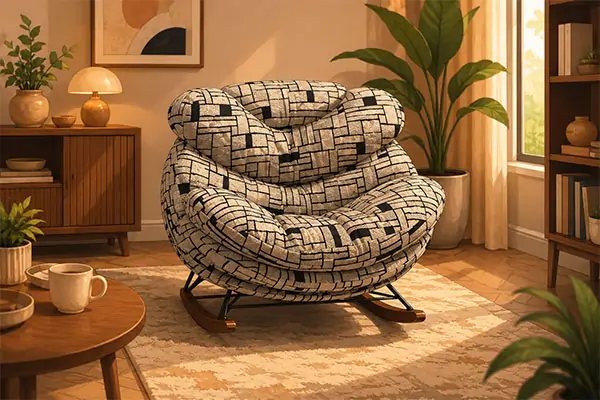
When a room needs a stronger focal piece, a product direction such as deep seat patterned lounge chair can help readers compare lounge chair dimensions shape and visual weight. In a quieter room, choose a chair that adds texture or proportion without competing with every other object.
| Room goal | Better styling move | Reason |
|---|---|---|
| Create a focal point | Keep nearby tables and rugs quieter | The chair has room to stand out |
| Soften a modern room | Use texture, curve, or warm upholstery | Balances hard lines and flat surfaces |
| Add color safely | Repeat the color once in art, pillow, or rug | Makes the accent look intentional |
| Support a small room | Use exposed legs or lighter visual weight | Keeps more floor visible |
| Build a reading corner | Add task light and a small surface | Turns a chair into a usable zone |
Buyer Mistakes to Avoid
The most common lounge chair sizing mistake is buying from a beautiful room photo without checking the buyer’s own room. Photos can hide seat depth, fabric care, delivery route, and the amount of empty space around the chair.
- Choosing A lounge chair before measuring the walkway.
- Ignoring seat height and discovering the chair is hard to stand from.
- Adding a strong color or pattern without repeating it anywhere else.
- Choosing delicate upholstery for a high-use room.
- Ordering a swivel or wide chair without side clearance.
- Forgetting the lamp, side table, rug, or visual anchor that makes the chair useful.
For a more structured lounge chair dimensions comparison, review high back swivel lounge chair when thinking about frame, back shape, or upholstery direction.
Related guide: How big is a lounge chair – real dimensions revealed
Product Selection Framework
A good lounge chair dimensions selection process starts with the user’s action. Will the chair be used for reading, guest seating, waiting, conversation, display, daily lounging, or hotel room use? Each answer changes the best size, fabric, cushion, and visual weight.
| Primary need | Prioritize | Secondary check |
|---|---|---|
| Room accent | Color, shape, and relation to sofa or bed | Does it still have a real seating purpose? |
| Daily lounge use | Seat depth, cushion support, and fabric durability | Can the material be cleaned? |
| Small-space seating | Compact width and open base | Does the chair block drawers or doors? |
| Project supply | Repeatable finish and packaging | Can the sample be repeated across orders? |
| Commercial use | Frame stability and easy maintenance | Will fabric survive daily traffic? |
| Decorative pattern | Controlled surrounding palette | Does the pattern fight with the rug or curtains? |
Specification Details to Check
For homeowners, dimensions and care details prevent wrong purchases. For designers, retailers, and hospitality buyers, a lounge chair specification also needs a clear specification sheet. The sheet should include overall size, seat size, back height, frame material, cushion description, fabric composition, packaging size, and care guidance.
If a lounge chair project needs a product with a stronger lounge direction, a related reference such as upholstered rocking lounge chair can help the reader compare depth, shape, and support.
| Specification | Why it matters | Question to ask |
|---|---|---|
| Overall dimensions | Confirms room fit | Can it pass through doors and elevators? |
| Seat dimensions | Predicts body fit | Can users sit back without strain? |
| Back and arm height | Affects support and visual scale | Does it work beside sofa, bed, or desk? |
| Fabric composition | Controls cleaning and durability | Is the fabric suitable for the traffic level? |
| Frame material | Affects stability | Is the structure described clearly? |
| Packaging size | Affects delivery and storage | Will it work for project shipment? |
How Cushion Shape Changes the Listed Size
For lounge chair sizing, the deeper decision depends on the specific feature being evaluated. If the keyword describes a color, think about palette and light. If it describes a material, think about touch and maintenance. If it describes a shape, think about dimensions and body support. If it describes a room, think about traffic flow and surrounding furniture.
In practical use, lounge chair dimensions buyers should compare at least three directions: the most attractive option, the most comfortable option, and the easiest option to maintain. The best final choice is usually the one that balances all three instead of winning only one category.
| Decision factor | Main question | Better answer |
|---|---|---|
| Color or pattern | Will it dominate the room? | Repeat one visual cue elsewhere and keep nearby items calmer |
| Material | Can it handle daily use? | Choose fabric by traffic level and cleaning habit |
| Shape or size | Does it fit the body and room? | Measure seat depth, width, back height, and clearance |
| Room use | Will people use it often? | Add light, side table, and comfortable support |
| Commercial buying | Can the look be repeated? | Confirm samples, packaging, and fabric availability |
Wholesale and Project Buying Notes
For wholesale, hospitality, or design projects, a lounge chair project needs more than a good photo. Buyers should confirm order quantity, fabric availability, sample timing, finish tolerance, packaging, delivery route, and whether repeat orders will be needed later.
Project buyers can also compare lounge chair dimensions with cone base swivel accent chair when the room needs a more distinctive chair shape or a stronger manufacturing reference. Internal product references should be used as decision support, not as a block of unrelated links.
- Ask for a clear specification sheet before approving a sample.
- Check whether fabric color can be repeated across production batches.
- Confirm cleaning instructions for the target market.
- Review packaging if the chair is large, curved, or textured.
- Plan spare fabric or replacement cushions for long-term projects.
- Keep a record of the approved sample for repeat orders.
Comparison With Nearby Chair Choices
A lounge chair should be compared with nearby chair categories before the buyer commits. Many wrong purchases happen because the buyer chooses the word that sounds attractive instead of the chair type that solves the room problem. An accent chair, lounge chair, barrel chair, swivel chair, side chair, and occasional chair can overlap visually, but they are not always used the same way.
If the main need is visual impact, the lounge chair can be selected for color, pattern, or shape. If the main need is long sitting, the buyer should look harder at seat depth, back height, and cushion firmness. If the main need is project supply, repeatable fabric, packaging, and sample control become as important as the style.
| Alternative | When it may be better | When it may be weaker |
|---|---|---|
| Simple side chair | Short sitting, dining, or compact corners | Not enough comfort for long lounge use |
| Lounge chair | Relaxed sitting and reading | Can take more floor space |
| Swivel chair | Conversation areas and open-plan rooms | Needs side clearance for movement |
| Barrel chair | Soft enclosed shape and compact comfort | May feel too rounded beside angular furniture |
| High back chair | More shoulder support and visual height | Can look heavy in small rooms |
| Low profile chair | Modern open rooms and window areas | May be harder to stand from |
Scenario Examples for Real Rooms
In a living room, A lounge chair should relate to the sofa, rug, table, and lighting. Place the chair close enough to join the conversation but not so close that knees compete with the coffee table. If the chair color is strong, repeat a smaller version of that color in artwork, a cushion, or a vase.
In a bedroom or hotel room, the lounge chair dimensions usually works best near a window, wardrobe wall, or unused corner. The chair should not block luggage movement, bedside drawers, curtain sweep, or the path to the bathroom. A small side table and a warm lamp often make the difference between a decorative chair and a seat people actually use.
In an office, reception room, or commercial lounge, the lounge chair dimensions should be judged by cleaning, stability, and repeatable comfort. A chair that looks dramatic but is difficult to maintain can become expensive over time, especially when several units are installed in the same area.
| Room | Best supporting element | Practical warning |
|---|---|---|
| Living room | Rug, side table, and repeated color cue | Do not crowd the sofa conversation path |
| Bedroom | Floor lamp and small table | Do not block wardrobes or bed circulation |
| Office lounge | Durable upholstery and easy standing height | Avoid delicate fabrics in daily-use waiting areas |
| Hotel room | Compact footprint and stable construction | Check luggage path and housekeeping access |
| Showroom | Simple background and clear lighting | Avoid visual clutter around the chair |
Maintenance and Long-Term Use
A lounge chair should be evaluated for how it will look after months of use, not only on the day it arrives. Light fabrics can brighten a room but may need more careful cleaning. Textured fabrics can hide small marks but may collect lint. Deep colors can feel rich, but they may show dust, fading, or pressure marks depending on material.
For homes with children, pets, or frequent guests, ask about stain response and cleaning method before choosing the final lounge chair dimensions fabric. For hospitality or office projects, request fabric composition, abrasion information when available, and clear care guidance. The best maintenance plan is simple enough that the owner or staff will actually follow it.
- Vacuum or brush the lounge chair dimensions according to fabric type.
- Keep direct sunlight in mind when choosing strong colors.
- Blot spills instead of rubbing them into upholstery.
- Use a side table so drinks and books do not sit on the chair.
- Rotate loose cushions if the design allows it.
- Ask for cleaning guidance before approving fabric for bulk orders.
Pre-Purchase Checklist
Before buying A lounge chair, use a final checklist that combines room planning, comfort, material, and project details. This prevents the chair from being judged only by style and helps the buyer compare options in a more consistent way.
| Check | Question | Pass sign |
|---|---|---|
| Room fit | Does the chair leave enough walking space? | People can move past without shifting furniture |
| Body fit | Can the user sit back naturally? | Feet rest comfortably and back reaches support |
| Material | Can the fabric handle the room’s traffic? | Cleaning method matches daily use |
| Visual connection | Does the chair relate to another element? | Color, texture, shape, or material repeats once |
| Support pieces | Is there a lamp or side table if needed? | The chair works as a usable zone |
| Delivery | Can it pass through the route? | Door, stair, elevator, and packaging size are checked |
| Project repeatability | Can the finish be repeated later? | Sample details and fabric availability are documented |
How to Brief a Supplier or Designer
When asking a supplier, designer, or factory about lounge chair dimensions, send more than a product image. Provide the room type, target quantity, preferred fabric, color direction, seating purpose, delivery country, packaging expectation, and any project deadline. This gives the supplier enough context to recommend a better specification.
For a residential lounge chair purchase, the brief can be simpler: room size, existing sofa or bed color, preferred material, budget level, and whether the chair is for daily sitting or mostly visual accent. For trade buyers, the brief should also include target market, sample approval process, quality standard, and repeat order possibility.
| Buyer type | Information to provide | Reason |
|---|---|---|
| Home buyer | Room photo, size, color palette, use case | Helps narrow style and scale |
| Interior designer | Floor plan, material board, project timeline | Connects chair choice to the full scheme |
| Retail buyer | Target customer, price position, fabric direction | Supports product line planning |
| Hotel buyer | Room type, quantity, cleaning expectation | Controls durability and maintenance |
| Importer | Packing needs, loading plan, certification questions | Prevents freight and compliance surprises |
Conclusion
The right lounge chair is the one that fits the room, supports the sitting purpose, uses a material the owner can maintain, and connects visually with nearby furniture. Start with measurements and use case, then move to color, fabric, shape, and styling details.
Strong buying decisions come from practical comparison. Check the room path, sitting comfort, fabric behavior, and visual balance before choosing lounge chair dimensions. A chair that passes those tests is more likely to be used, photographed, and appreciated after installation.
FAQ
What is the best way to choose lounge chair dimensions?
Start by measuring the room and defining the chair’s job. Then compare seat depth, back height, fabric, cushion support, color relationship, and maintenance needs before choosing lounge chair dimensions.
What size should a lounge chair be?
A lounge chair works best when the overall width, seat depth, and front clearance are checked together. A chair that fits the final corner may still fail if it blocks the walking path.
Do cushions change the effective seat dimensions?
Yes. Thick or loose back cushions reduce usable seat depth, while seat cushions compress and lower the occupied seat height. Compare both the unloaded product dimensions and the measurements while someone is sitting in the chair.
How much clearance should I leave around a lounge chair?
Protect the main walkway and leave enough space to reach nearby tables, curtains and doors. A fixed chair needs its listed footprint; swivel and reclining models also need rotation or movement clearance.
What is the biggest mistake to avoid?
The biggest mistake is choosing lounge chair dimensions from a photo without checking dimensions, clearance, fabric care, and how the chair connects to the room.