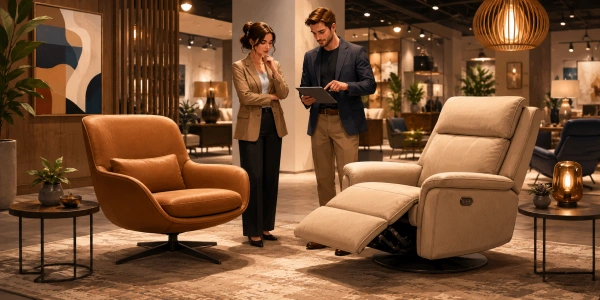
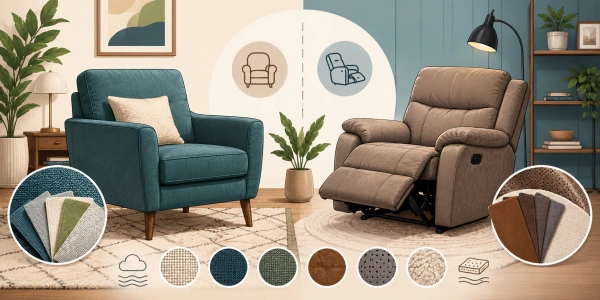
The main difference between a lounge chair and a recliner is movement. A lounge chair normally has a fixed, relaxed seating angle, while a recliner changes position and may raise the footrest. Lounge chairs are generally simpler, lighter and easier to style; recliners provide more adjustable body support but need additional clearance and mechanism maintenance.
Choose according to use rather than appearance alone. A fixed lounge chair works well for conversation, reading and flexible room layouts. A recliner is often the stronger choice for long television sessions, naps or users who benefit from adjustable leg elevation.
Key Differences Between Lounge Chairs and Recliners
Let’s start by getting to know our two contenders. At first glance, both an armchair and a reclining chair might seem similar—they’re both single seats designed for relaxation. But the core difference is in the mechanics. A lounge chair, sometimes called an accent chair or a reading chair, is typically a fixed, stationary seat. It’s all about elegant posture and providing a dedicated spot to unwind with a book or a cup of tea. A recliner, on the other hand, is built for movement. It has a mechanism that allows the back to recline and often a footrest to pop up, transforming the seat into a near-horizontal lounging position. So, when you’re comparing a stationary chair versus a movable one, you’re really looking at a philosophy of rest: poised versus fully kicked-back.
Function and Movement
This is the biggest divider. A recliner’s primary function is adjustability. With a lever, button, or pull of a handle, you can find that perfect sweet spot between sitting and lying down. Many modern power recliners even offer features like massage and heat. A lounge chair’s function is more about providing a consistent, supportive shape. It encourages you to sit *in* it rather than *on* it. Think of it this way: a recliner is for active relaxation where you change positions, while a classic lounge chair is for sinking into a single, perfect cradle of comfort.
Style and Aesthetics
Here’s where the lounger vs recliner debate gets interesting for your decor. Lounge chairs are often the style champions. From the iconic curves of a mid-century modern design to a sleek contemporary sling chair, they are statement pieces that elevate a room’s look. Recliners have historically had a bulkier reputation, but today’s market is full of stylish options, including wall-hugger recliners that save space and modern designs that look like elegant armchairs until they recline. The question becomes: do you want a chair that is primarily a sculpture, or one that is a functional chameleon?
The Unique Value of Each Chair
Now that we see the differences, let’s talk about what makes each one special. I like to think of them as serving different “comfort moods.” Understanding their strengths will directly point you to the right choice for your daily life.
When to Choose a Lounge Chair
Choose a lounge chair if your priority is aesthetics and a dedicated relaxation ritual. It’s perfect for a sunny corner for reading, as a companion piece next to a fireplace, or in a bedroom as a place to put on shoes. It’s ideal for smaller spaces where a bulky mechanism isn’t needed. If you love the idea of a comfort chair that doubles as art, a lounge chair is your winner. They often encourage better sitting posture, which is great for shorter, focused periods of relaxation. For more on iconic designs, you can explore the history of the modern lounge chair at resources like the Victoria and Albert Museum.
When a Recliner is the Better Choice
Opt for a recliner if ultimate, adjustable comfort is your goal. It’s the champion for marathon movie nights, for anyone who needs relief for their back or legs, or for spaces dedicated to media and full-body relaxation. Asking what is better a recliner or a regular chair? for a home theater room? The recliner wins every time. Modern lift chair recliners are also invaluable for those with mobility issues, providing gentle assistance to stand up. It’s the functional workhorse of comfort that adapts to your body’s needs moment by moment.
Related guide: Leisure Chair vs Sofa Chair: Which One Is Right for Your Space?
How to Choose: Practical Advice for Your Space
Let’s get practical. I suggest you walk through your home and ask a few simple questions. This isn’t just about the chair itself, but how it will live with you. Here’s a friendly guide to narrowing it down.
Assess Your Room and Lifestyle
First, measure your space! A recliner needs room to fully extend. Check if you need a zero gravity recliner or a wall-saver recliner that can be placed closer to the wall. For a lounge chair, consider the footprint and the visual weight. Next, think about your routine. Do you nap often? Do you have back pain? Your answers lean toward a recliner. Do you host book club or want a chic spot for conversation? A lounge chair shines. It’s about matching the chair’s purpose to your most common relaxation activities.
Try Before You Buy
This is my best piece of advice: if possible, test them out. Sit in a few lounge chairs and notice the back support and arm height. Recline in several recliners—work the mechanism, feel how smoothly it moves, and see if the headrest supports you properly. Pay attention to the upholstery; performance fabrics are great for families. It’s the only way to answer the recliner versus armchair comfort question for *your* body. Remember, the right chair should feel like a welcome hug at the end of the day.
Clearing Up Common Misconceptions
Let’s bust a few myths! A common one is that all recliners are huge and ugly. Not true anymore! Many contemporary models are incredibly sleek. Another is that lounge chairs aren’t comfortable. A well-designed one provides exceptional, posture-perfect comfort—it’s just a different type than a reclined position. Finally, some think this is a strict either-or choice. But you know what? In a perfect world, you might have one of each in different rooms! A plush recliner in the den for TV time and a beautiful Bergere chair (a type of lounge chair) in the living room for style.
Related guide: Lounge Chair vs Reading Chair: Which One Is Your Perfect Match?
Related Chair Fit Guides
Use the recliner chair dimensions guide to measure both the closed footprint and full reclining position. If easy standing matters, compare the guidance in recliner chair seat height. For fixed seating, start with the lounge chair dimensions guide, then browse the lounge chair collection or ask about project specifications.
Final Thoughts: Making Your Decision
So, which one is right for your space? If you value timeless style, have a smaller area, and want a chair for focused activities like reading, a lounge chair is a fantastic investment. It’s a piece that adds character. If your top priority is versatile, customizable comfort for lounging, napping, and therapeutic relief, then a recliner is your best friend. It’s about being honest with how you really live and relax. Whichever you choose, prioritize quality construction and good fabric—it’s a piece you’ll enjoy for years. Happy lounging (or reclining)!
FAQ
Is a lounge chair the same as a recliner?
No. A lounge chair usually has a fixed frame and relaxed posture, while a recliner uses a manual or powered mechanism to change the back angle and foot support.
Which takes up more space?
Recliners usually require more operating clearance. Wall-hugger models reduce rear clearance, but the open footrest still needs unobstructed space in front.
Which is easier to maintain?
A fixed lounge chair has fewer moving components and is generally easier to maintain. Recliners require periodic checks of hinges, cables, motors or power connections.
Related guide: Lounge Chair vs Armchair: Which One Is Right for Your Space?
Lounge Chair vs Recliner Comparison Table
A lounge chair normally creates a relaxed posture through fixed proportions, cushions and frame geometry. A recliner changes position through a manual or powered mechanism and usually includes a moving footrest. Neither type is automatically more comfortable; the better choice depends on posture, movement needs, room clearance and maintenance expectations.
| Decision point | Lounge chair | Recliner |
|---|---|---|
| Position | Usually fixed | Adjustable back and/or footrest |
| Floor planning | Use listed footprint | Check closed and fully open dimensions |
| Maintenance | Frame, joints and upholstery | Also inspect mechanism, controls and power parts |
| Visual character | Often lighter or more sculptural | Often bulkier because of moving components |
| Best fit | Reading, conversation and design-led rooms | Adjustable TV viewing and supported leg elevation |
For exact footprint checks, compare the chair against the standard lounge chair dimensions. Recliner specifications must include both closed and open depth.
Which Is Better for a Small Living Room?
A compact fixed lounge chair is usually easier to plan because its footprint does not change. A wall-hugger recliner can work in a smaller room, but the front still needs clearance for the footrest and legs. Mark both the closed and open position on the floor before ordering.
If the chair will sit beside a sofa, compare seat heights and visual weight using the living-room chair selection guide. A mechanism-heavy recliner may dominate a light sofa even when the measurements technically fit.
Durability and Maintenance Questions
For a fixed lounge chair, ask about frame joints, suspension, foam and upholstery. For a recliner, add mechanism cycle testing, replacement-part availability, manual release, cable routing and motor or control warranty. Commercial buyers should also check whether the mechanism can be serviced without removing all upholstery.
Buyers who prioritize a simple structure and design flexibility can compare models in the lounge chair collection. Those who mainly want deep relaxation should first use the relaxing chair guide to define the required posture and support.