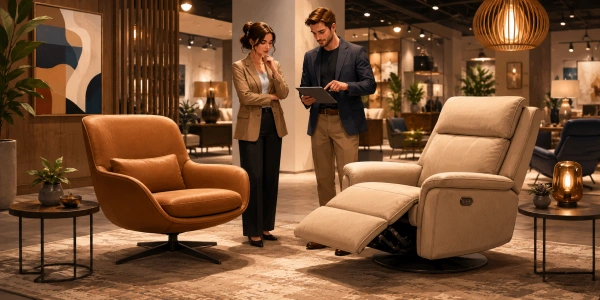
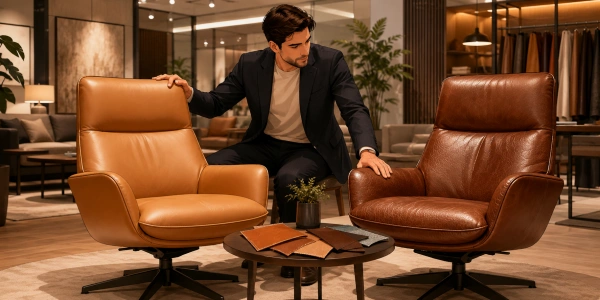
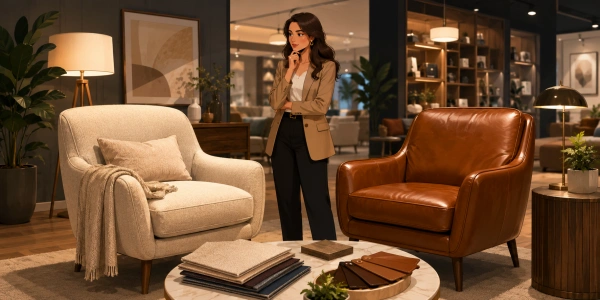
This lounge chair comparison guide helps you evaluate armchairs, recliners, fabric versus leather options, and indoor versus outdoor models. Whether you are shopping for personal comfort or sourcing for a commercial project, understanding the key differences ensures you make an informed decision. The following sections break down the most important factors, from material performance to buying strategies, so you can confidently choose the right lounge chair. A thorough lounge chair comparison considers comfort, durability, style, and budget to match your specific needs.
Lounge Chair Types: Armchair vs. Recliner
Understanding the core differences between armchairs and recliners is essential for a proper lounge chair comparison. Each type serves distinct needs and spaces.
Armchair Features and Benefits
- Space-efficient: Armchairs typically have a smaller footprint, making them ideal for compact living rooms or reading nooks.
- Design versatility: Available in countless styles, from mid-century modern to traditional wingbacks.
- Fixed comfort: Usually have a static seating position, which can be better for posture and formal settings.
- Cost-effective: Generally more affordable than recliners due to simpler mechanisms.
Recliner Features and Benefits
- Adjustable comfort: Recliners offer multiple positions, from upright to fully reclined, reducing pressure on the lower back.
- Health benefits: Studies show that reclining at a 135-degree angle can improve spinal health and circulation (Journal of Physical Therapy Science, 2018).
- Space requirements: Need additional clearance (typically 12–18 inches behind the chair) for full recline.
- Mechanical durability: Look for steel frames and tested mechanisms rated for 50,000+ recline cycles in commercial applications.
Fabric vs. Leather: A Detailed Lounge Chair Comparison
The upholstery choice dramatically affects comfort, maintenance, and longevity. This section compares fabric and leather for your lounge chair comparison needs.
Fabric Upholstery
- Warmth and comfort: Fabric feels softer and warmer to the touch, ideal for colder climates.
- Color and pattern variety: Thousands of options, including performance fabrics that resist stains and fading.
- Maintenance: Requires regular vacuuming and professional cleaning; spills can set quickly.
- Durability: High-quality fabrics (e.g., solution-dyed acrylic) can last 10–15 years in home use.
Leather and PU Leather
- Easy cleaning: Wipes clean with a damp cloth; resistant to spills and odors.
- Premium appearance: Develops a natural patina over time, adding character.
- Temperature sensitivity: Can feel cold in winter and sticky in summer without climate control.
- Cost: Genuine leather is 3–5 times more expensive than fabric; PU leather offers a budget-friendly alternative.
Indoor vs. Outdoor Lounge Chairs: Critical Differences
When conducting a lounge chair comparison, the environment is a decisive factor. Indoor and outdoor chairs use different materials and construction methods.
Indoor Lounge Chairs
- Material focus: Prioritize comfort and aesthetics over weather resistance.
- Frame options: Wood (oak, walnut, teak) and metal (steel, aluminum) are common, but wood requires protection from moisture.
- Upholstery: Fabric, leather, or velvet; foam density should be 1.8–2.5 lb/ft³ for long-lasting support.
- Weight capacity: Typically 250–350 lbs for residential models.
Outdoor Lounge Chairs
- Weather resistance: Frames use powder-coated aluminum, stainless steel, or synthetic wicker (HDPE).
- Upholstery: Solution-dyed acrylic fabric or mesh that resists UV rays, mold, and mildew.
- Maintenance: Hoses down easily; cushions should be quick-drying and removable.
- Durability data: Quality outdoor chairs can withstand 5–10 years of sun and rain exposure.
View product: Modern Fabric Lounge Armchair for Commercial Interiors
Wholesale and Commercial Buying Considerations
For businesses, a lounge chair comparison must include supply chain factors. Bulk orders require careful evaluation beyond consumer features.
Quality Control and Customization
- Sample testing: Always request a pre-production sample to verify foam density, stitching quality, and frame stability.
- Customization options: Factories can adjust fabric, color, leg style, cushion firmness, and logo branding. Structural changes (e.g., seat depth) may require MOQ of 200–500 units.
- Inspection standards: Use AQL (Acceptable Quality Level) with critical defects at 0%, major defects below 2.5%.
Packaging and Logistics
- Export packaging: Flat-pack or RTA (ready-to-assemble) reduces shipping volume by up to 40% for container orders.
- Lead time: Standard production takes 30–45 days; rush orders may add 15–20% cost.
- MOQ: Minimum order quantity ranges from 50 to 300 units depending on customization.
Lounge Chair Comparison: Key Statistics
- According to a 2023 survey by Furniture Today, 62% of buyers prioritize comfort over price when selecting a lounge chair.
- Leather lounge chairs account for 28% of the market, while fabric holds 65% (Statista, 2024).
- The global lounge chair market is projected to grow at a CAGR of 5.3% from 2024 to 2030 (Grand View Research).
- Commercial-grade lounge chairs must pass BIFMA X5.4 standards for durability and safety.
Buying Checklist for a Lounge Chair Comparison
- Define the target room, market, or project use.
- Measure the available space and walking clearance (minimum 24 inches around the chair).
- Compare seat height (17–20 inches), seat depth (20–24 inches), back angle (100–135 degrees), and cushion support.
- Ask for upholstery details, fabric swatches, or leather specifications (thickness, grain type).
- Check frame material (solid wood vs. plywood), leg connection (dowel, screw, or metal bracket), and weight capacity.
- Confirm MOQ, sample policy, lead time, packaging, and quality inspection for bulk orders.
Frequently Asked Questions (FAQ)
Q: What is the most important thing to check before buying?
A: The most important thing is whether the chair fits the user and the space. Comfort, proportion, material, and construction should be checked together. For commercial buyers, also verify compliance with BIFMA or ANSI standards.
Q: Is a lounge chair suitable for commercial use?
A: Yes, but commercial use requires stronger durability, easy-clean upholstery (e.g., Crypton fabric or bonded leather), stable frames, and consistent production quality. Expect weight capacities of 350–500 lbs for high-traffic areas.
Q: Can lounge chairs be customized?
A: Many factories can customize fabric, color, chair legs, cushion firmness, labels, logo branding, and packaging. Larger structural changes (e.g., seat depth or arm height) may require higher MOQ (200+ units) and longer lead time (45–60 days).
Conclusion
A good lounge chair should look attractive, feel comfortable, fit the room, and remain durable after long-term use. For business buyers, choosing a reliable lounge chair manufacturer or supplier also improves quality control, customization, and wholesale value. By following this lounge chair comparison guide, you can confidently select a chair that meets your specific needs—whether for a cozy home corner or a demanding commercial project.